




Ready to Embark on an Exciting Journey with WIN?
Take the first step toward personal and financial freedom by filling out the interest form. One of our franchise advocates will be in touch with you soon!


Franchising allows entrepreneurs to start a venture under a brand that’s been in the marketplace for years. Instead of creating workflows and systems from scratch, new business owners use proven processes. They can rely on a structured model refined over the years to find their footing within weeks instead of months.
At the center of franchising is a franchise agreement, a comprehensive document that outlines how the entrepreneur will work with the established brand. It defines each party’s responsibilities and describes how the partnership will work. Understanding the intricacies of the agreement allows entrepreneurs to know what to expect once they start the franchise journey.
A franchise agreement is a legally binding contract between a franchisor and a franchisee. The franchisor is an established brand that allows new ventures to operate under its name. The franchisee is the person starting a business.
Once the two parties sign the franchise contract, the franchisee can operate a business using the brand’s name and trademarks. They are also free to use operational processes and systems. Of course, the entrepreneur must run the business and provide superior customer service to drive profitability.
The franchisor’s responsibilities are also outlined in the agreement. The brand continuously provides support and improves systems. It also markets the brand and, in doing so, promotes the businesses that operate under the franchise.
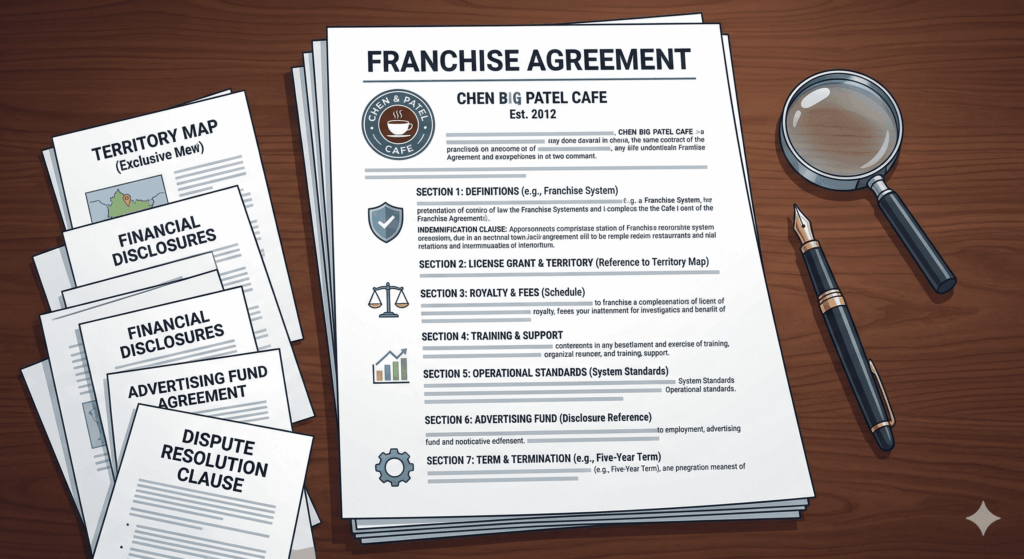
While the franchise agreement is legally binding, it is more than just a formal document. The contract forms the foundation of the relationship between franchisors and franchisees. A closer look reveals why it is so vital.
The agreement outlines the roles and responsibilities of each party. It also covers the obligations each must fulfill. Since everyone knows what their duties are, the professional relationship stays strong.
Consistency is an important element in franchising, as a single location’s bad reputation may affect all ventures under the brand. The agreement specifies how each business should present its products to ensure high-quality services in multiple locations.
At a granular level, the agreement touches on the daily operations of the new business. These include proven ways to execute marketing strategies and handle customer service. These guidelines reduce trial-and-error mistakes.
A well-structured framework is a roadmap for business success. By following the franchisor’s proven methods, businesses can focus on growth rather than establishing an operating framework. Their success benefits them and the brand.
The first question prospective franchisees ask is “What information is included in a franchise agreement?” Entrepreneurs need to understand what to expect before signing a document that outlines how their businesses will run. Here are the main elements of a franchise contract.
One of the most important parts of a franchise agreement is the business owner’s right to use the franchisor’s brand. These are recognizable elements that allow a new venture to attract customers from day one. The entrepreneur can use the brand’s:
The responsibilities of both parties are crucial to the agreement. The clarity of roles helps avoid conflicts and ensure a smooth partnership.
Franchisors are responsible for maintaining the brand’s overall reputation. They usually incentivize well-performing businesses to motivate upcoming ones. Additionally, they offer comprehensive training programs to keep franchisees competitive and provide marketing support to promote the brand and the businesses operating under it.
As for the franchisees, they agree to take the reins and steward their businesses to profitability. They are in charge of daily operations, customer support, and local marketing and promotions. At all times, they follow the brand’s standards to preserve its reputation and the reputations of other franchisees.
The fees and payments payable over the duration of the franchise are an equally crucial piece of information outlined in the agreement. It allows franchisees to understand their financial obligations and plan accordingly.
Some of the fees explained in the contract are:
If a location limitation exists, the franchise agreement discusses it in detail. As a business owner, you will know whether your territory is exclusive or shared. Also, information about the boundaries within which your business can operate is well outlined. It’s also possible to determine whether you can set up offices in multiple locations within the allowed territory. Such information is critical for entrepreneurs who need to assess the Total Addressable Market (TAM).
Besides providing new businesses with tools and systems for success, franchises also create predictability. Information about how long the agreements will last helps businesses operate in a stable environment, since most contracts last several years. To help entrepreneurs plan long-term, the agreement outlines:

While every franchise contract is different, the key terms remain the same. Before you commit, be sure to understand how the agreement affects the way your business will operate and what obligations you must fulfill.
Ensure that the contract clearly outlines the payment structure. It must state the initial payment’s amount and whether it’s payable in installments. While at it, check and calculate recurring expenses, including marketing contributions and royalties submitted to the brand.
The other important element is operational standards. Take your time to understand the quality of service you need to provide and how the daily operations must run as stipulated by the agreement. The contract should also provide clear instructions on branding and general business procedure.
In order to accurately assess the business potential, check if the franchise contract outlines the territory you can operate in. Information on how many franchisees can operate in the same area as you will also help you know the level of competition to expect. If your business has plans for expansion, be sure the contract aligns with your vision.
An ideal franchise agreement lets franchisees know how much support the brand will provide over the course of the partnership. There are usually initial training programs that get you and your team up and running. However, as markets change, you may need new knowledge. Review the contract to know whether you’ll receive operational manuals and training to keep up with trends.
A general franchise agreement template helps prospective entrepreneurs understand how the document is organized. Of course, the details will vary depending on the brand and type of industry. However, you can expect to find the following core sections in a franchise agreement:
Franchise contracts are the foundation of the franchise system. They grant important rights to those starting a new business, equipping them with tools for a speedy start. The roles of the parties in the contract are well defined, allowing a smooth partnership that benefits the franchise owner and the established brand.
Franchise systems like WIN Home Inspection provide structured training and licensing support to franchise owners. They also offer ongoing operational guidance to home inspectors. Such support is essential to starting and running a business, and inspectors can focus on growing local businesses while relying on proven systems. Schedule a free consultation to know more.