



Ready to Embark on an Exciting Journey with WIN?
Take the first step toward personal and financial freedom by filling out the interest form. One of our franchise advocates will be in touch with you soon!

When someone is building a home, they hire a slew of skilled workers, ranging from framers and plumbers to engineers and general contractors, and everyone in between. In the same way, when it’s time to fix their car, they go to a licensed mechanic, a hair stylist when it’s time for a cut, and the list goes on.
These individuals and companies offer specialized, hands-on skills and knowledge to provide key services, and demand for these services continues to rise.
High-demand sectors, particularly construction and maintenance, need new workers. Why? Because on-site, hands-on, specialized expertise cannot be easily automated or outsourced.
Interested in entering the trade service industry, specifically the home services sector? Here’s what you need to know and how to get started.
It’s well known that demand in the skilled trade service industry is on the rise.
But what are trade services?
Trade services are careers that require specialized, hands-on skills acquired through technical education, training, and apprenticeship programs. Some of the best trade jobs are in sectors like construction, maintenance, and repair, and they often require certification or licensing.
The trade service industry includes a range of skilled careers focused on providing direct services to the public, consumers, or businesses.
Given the services it provides, the trade services industry remains foundational to the modern economy. When looking at the numbers, the impact of these careers is apparent, as is the opportunity ahead.
According to the US Bureau of Labor Statistics, projections indicate a 4% to 60% growth in skilled trades through 2033, depending on the specific role. This projected growth is driven by an aging workforce and ongoing infrastructure investments. This high demand for skilled labor has led to competitive salaries and high job satisfaction. Many of the roles also offer alternatives to traditional jobs that require four-year degrees.
This growth is creating a domino effect, with careers related to core skilled trades. For example, the real estate market and home inspection industry are tied to skill trades. This interdependence underscores that a strong economy requires support for both the skilled trades and the professional services that enable them.
The home services sector covers a range of specialized services focused on repairing, maintaining, improving, and cleaning residential properties. These services are crucial for property upkeep and increasingly in demand, particularly when aiming for greater safety and efficiency.
Home repair and maintenance services focus on a property’s functionality and value. The goal is typically to preserve a property’s value, ensure safety, enhance efficiency, and extend the lifespan of home systems. In many cases, service providers are called in when something breaks or a small issue arises, so it doesn’t turn into a costly emergency.
Examples include maintenance services that address general repairs, painting, and fixture installations. There are also skilled trades services for repair-based scenarios that overlap with construction-related trades, ranging from roofing to HVAC installation and repair. There are also some highly specialized services, such as window or carpet cleaning.
As discussed, construction-related tradespeople are needed for repair and maintenance scenarios, but they are also called in for new builds.
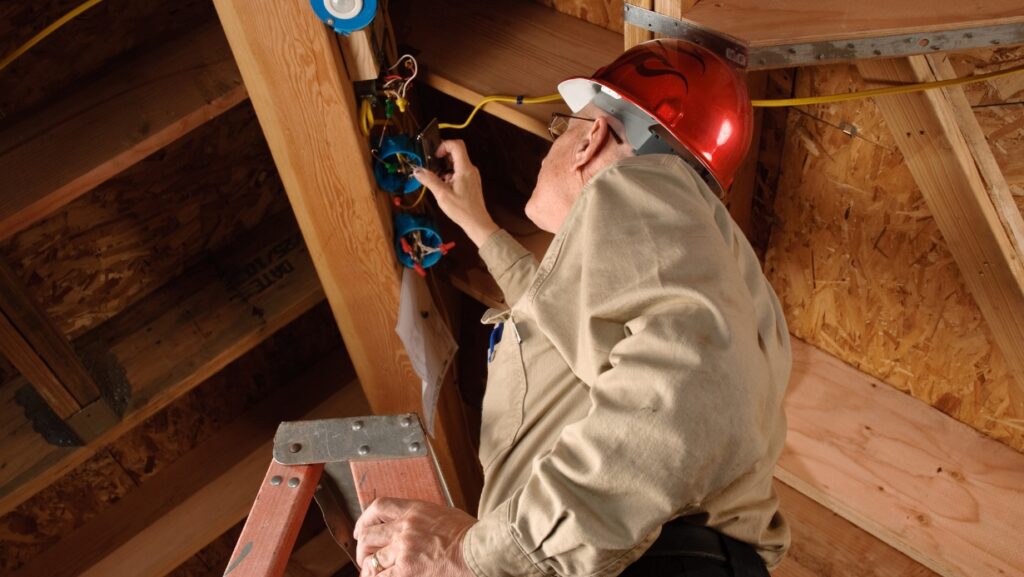
HVAC professionals, plumbers, electricians, carpenters, roofers, drywallers, and masons are all skilled trades. These service providers often require certification, licensing, and apprenticeships, commonly operating as subcontractors under general contractors.
While some specialize in new construction, others offer guidance for various phases of homeownership. For example, a roofing company may be called after an inspection to address water damage or other roof-related repairs.
Specialized services are those that help solve urgent problems or enhance a home’s security or aesthetics. Examples include landscaping services, chimney cleaning, pest control, garage door installation services, security system upgrades, etc.
A specialized service that overlaps with all of the above home services is home inspections. A qualified home inspector provides a comprehensive visual assessment of a property’s systems. This assessment includes structural integrity, electrical, plumbing, HVAC, and exterior components to identify defects, safety hazards, and necessary repairs. These services may be requested by the home seller or home buyer.
Skilled trades businesses remain in high demand because they are foundational to modern infrastructure, emergency maintenance services, energy efficiency, and more. In many cases, these businesses provide services that cannot be delayed or ignored. However, many trade jobs also focus on a proactive vs. reactive approach.
For example, following a full home inspection or roof inspection, a leak in attic flashing may be discovered. A homeowner would want to address that immediately to prevent costly roof repairs later, including replacing ceiling joists and insulation. So, trade service businesses address both. They provide proactive services, focusing on prevention, routine, and long-term planning, as well as reactive services, focusing on repairs and urgency. Both provide steady work.
There is also consistent work due to the nature of the job, which involves trade services and is subject to mandatory regulations. Building codes and safety regulations require licensed technicians for inspections, installations, repairs, and upgrades.
As essential, high-demand, and specialized businesses, trade service providers may operate under a service-based model. This model often provides labor-intensive on-site services, generating revenue through hourly rates, job-based flat fees, or maintenance contracts.
To provide these services, companies must offer clients licensed, certified professionals. For many, this is their unique selling point, helping them limit competition. As they build their portfolios and reputation, most focus on their local area, building a local reputation based on trust and reliability. Clients will often prioritize speed, expertise, and reliability over cost, especially in emergency situations.

When the goal is to jump into the industry and seek a high-growth opportunity, franchising is an excellent choice. Home trade services are particularly ideal. These businesses are well-suited for franchising due to their repeatable processes and steady demand. They also offer owners advantages such as low overhead costs, recession-resistant demand, and high scalability.
For those seeking entrepreneurship, a home trade service franchise offers a fast, cost-effective option to get started. You’re buying into proven systems that work while gaining support throughout the entire process. Franchisees, including those with no industry experience, benefit from established training, marketing, and operational support systems. This support allows franchise owners to quickly build trust.
In terms of sustainability, home-based trade services are often protected during recessions. The services provided in this industry are considered essential, ensuring consistent, year-round revenue even during economic downturns.
One example of a beneficial trade service franchise is home inspections. Franchises like WIN Home Inspection, ranked #1 across the industry by Entrepreneur for the fourth year in a row, offer structured training, support, and proven systems.
WIN removes many of the traditional barriers to entry for entrepreneurs looking to start and scale a home services business. Gain access to in-house, proprietary technology platforms, comprehensive training programs for 35+ residential services, and ongoing operational, marketing, and technical support. As a result, you can build a six-figure business.
This industry has hit an exciting point, as technology is reshaping how inspectors operate. For example, inspectors can now implement AI-powered tools to support faster, more efficient workflows and improve compliance. When investing in a Win Home Inspection franchise, you’ll gain access to easy-to-use technology. Take advantage of WINconnect, WIN’s cloud-based CRM platform, and WINspect, WIN’s in-field inspection app and software.
If you want an opportunity that allows you to help others while honing your technical skills, WIN may be just what you’re looking for. Some entrepreneurs who invest in a WIN franchise have past business experience, while others are interested in learning along the way.
In fact, practically all WIN Strategic Partners launch their businesses with no prior experience in the home inspection industry. However, with our proven process, dedicated support team, and rigorous training program, they achieve great success.
WIN’s unique process helps entrepreneurs learn what it takes to start a home inspection business. That way, you can determine if WIN is the right opportunity for you. From there, you will be trained in both home inspection and business operations.
Ready to take the first step? Schedule a free consultation and our franchise team will get in touch with you!